
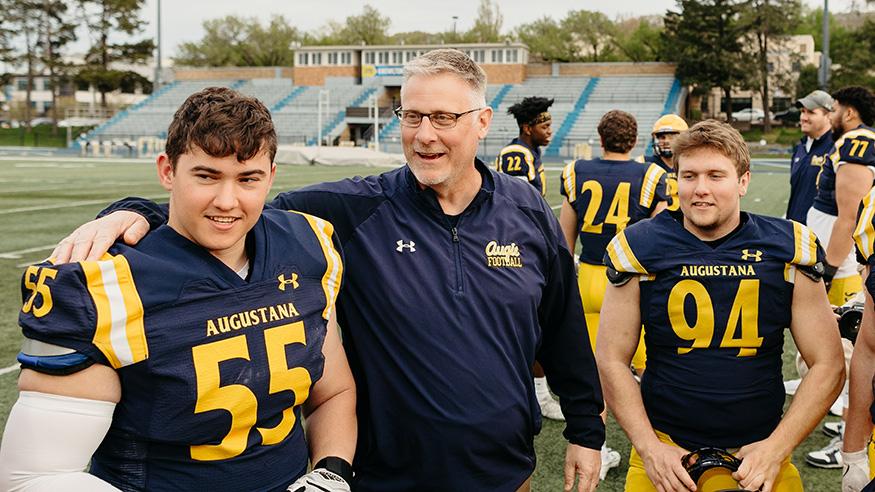
Listening well is one way coaches can build a culture of trust and readiness that gives student-athletes the space to care for their mental health.
Viking coaches, staff complete Mental Health First Aid training
Academic demands, social pressures and expectations to perform can quietly weigh on student-athletes and influence how they show up to practice and competition.
While physical fitness often takes priority in sports, Augustana's coaches and athletic staff know mental health is just as important for student-athletes’ well-being. In fact, in a recent NCAA-led survey of 6,000 head, associate and assistant coaches across all three divisions, more than 80% reported spending more time discussing mental health with student-athletes than they did before the COVID-19 pandemic.
On February 2, members of Augustana's athletic department completed a six-hour, in-person Mental Health First Aid training sponsored by the NCAA. The program is designed to equip coaches and staff with the tools to recognize, understand and respond to signs of mental health challenges.
"Collectively, we want all of our students to be well-equipped for the daily challenges they will encounter.”
The training emphasized early intervention, practical support and connecting individuals to appropriate campus and community resources. For Augustana’s coaches and athletic staff, the initiative reinforces the department’s commitment to ensuring that student-athletes are supported not only in competition, but in all aspects of their college experience.
“Optimal athletic performance is dependent upon multiple factors, including a positive state of mental health,” said Mike Zapolski, director of athletics. “Prioritizing proper mental health highlights the importance of taking a holistic approach to a student's academic, athletic and social well-being. Collectively, we want all of our students to be well-equipped for the daily challenges they will encounter.”
Jay Clark, associate athletic trainer, noted that mental and physical health are deeply connected, particularly when injuries occur. Extended time away from competition can affect identity, confidence and even academic performance, as student-athletes may struggle with the sudden loss of routine and team connection.
“A torn ACL requires surgery and rehab,” Clark said, “but in the time it takes to recover, there are mental limitations, too. If a student-athlete doesn’t feel like an athlete, there is a giant mental void that needs to be filled.”
“Whether it be personal relationships, academics, health or performance pressure, issues need to be addressed and processed in a healthy way so that the athlete feels more grounded, in control and confident."
Clark emphasized that addressing those mental challenges alongside physical recovery can help student-athletes stay engaged, maintain perspective and return to their sport with greater resilience.
While injuries can make the connection between mental and physical health especially visible, coaches recognize that student-athletes navigate a range of stressors every day, many of which never show up on an injury report or stat sheet.
Ramsey Vens '10, head swimming and diving coach, sees that connection firsthand.
“Whether it be personal relationships, academics, health or performance pressure, issues need to be addressed and processed in a healthy way so that the athlete feels more grounded, in control and confident,” Vens said. “I truly believe that if, as coaches, we ensure that our athletes feel supported outside of their sport, they will have a much better, fun and successful experience in their athletics.”
By addressing mental health proactively, Augustana’s coaches and staff are better equipped to foster an environment of guidance and resilience.
“The biggest takeaway from the training for me is that the skill that helps us learn how to help our athletes isn't what we can say or what questions we ask, but rather how ready we are to listen,” Clark said. “When our athletes and teammates tell us they would like help, there are so many ways they let us know.
"Being ready for when that happens is more about receiving it and ensuring that we are trusted enough to handle that stress and get our athletes to the resources that allow them to interact with mental health constructively. We can't achieve that if we are trying to rush the conversation.”
Listening well is one way coaches can build a culture of trust and readiness that gives student-athletes the space to care for their mental health.
By Genevieve Ryan '26